IPL vs. BBL vs. Laser: What's the Difference?
Intense Pulsed Light (IPL) is a broad-spectrum light technology that emits multiple wavelengths of light simultaneously.

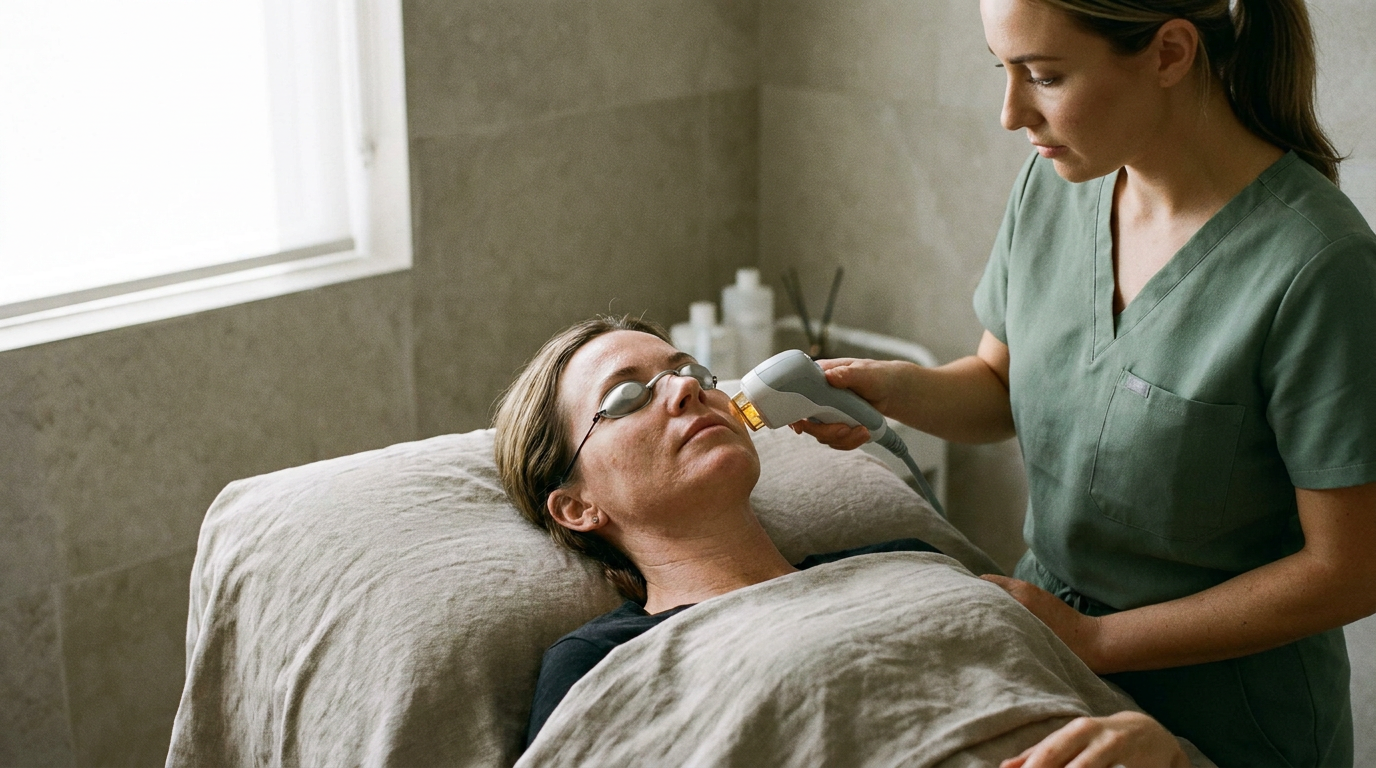
IPL Explained
Intense Pulsed Light (IPL) is a broad-spectrum light technology that emits multiple wavelengths of light simultaneously. Unlike laser, which uses a single, focused wavelength, IPL delivers a range of wavelengths that scatter into the skin.
IPL devices use flashlamps to produce pulses of broad-spectrum light, typically 500 to 1200 nm. Filters target specific color-absorbing molecules in the skin, such as melanin in pigmented lesions or hemoglobin in blood vessels. The light energy converts to heat, damaging the targeted structures while leaving surrounding tissue relatively unharmed.
Key Characteristics of IPL
Broad spectrum using multiple wavelengths.
Less precise targeting than laser technology.
Generally gentler with minimal downtime.
Requires multiple sessions for optimal results.
Works best on lighter skin tones with a risk of burns on darker skin types.
Effective for surface-level concerns.
Common IPL Uses
Sun damage and age spots.
Redness and rosacea.
Broken capillaries.
General skin rejuvenation.
Hair removal, though often less effective than laser.
BBL Explained
BroadBand Light (BBL) is a branded, advanced form of IPL technology developed by Sciton. It is often marketed as the next generation of IPL with improved precision and customization.
BBL uses the same broad-spectrum light principle as IPL but with enhanced technology. This allows for more precise wavelength filtering, adjustable pulse durations, and integrated cooling. The device offers multiple adapters and settings for different concerns.
Key Characteristics of BBL
Advanced IPL technology developed by Sciton.
More customizable than standard IPL.
Superior cooling systems for comfort.
Can treat a wider range of skin types than basic IPL.
Multiple handpieces available for different concerns.
Common BBL Uses
Pigmentation and sun damage.
Vascular lesions and redness.
Acne treatment using specific BBL modes.
Skin texture improvement.
Forever Young BBL maintenance protocols.
It is important to clarify that BBL is essentially premium IPL. The improvements are found in the delivery, customization, and safety features rather than a fundamental change in light physics.
Laser Explained
Laser (Light Amplification by Stimulated Emission of Radiation) uses a single, concentrated wavelength of light for precise targeting. This fundamental difference from IPL or BBL makes laser treatments more powerful for specific concerns.
Laser devices emit monochromatic light at a specific wavelength to target chromophores or tissue depths. Different wavelengths target different concerns, such as melanin, hemoglobin, or water in the tissue.
Common Types of Lasers
Q-switched lasers: Deliver very short, high-energy pulses to break up pigmentation. These are used in the Skinfolio Laser Facial.
Ablative lasers (CO2, Erbium): Remove layers of skin for resurfacing, requiring longer downtime.
Non-ablative lasers: Heat deeper tissue without removing surface skin, resulting in less downtime.
Fractional lasers: Treat a fraction of the skin in a pixelated pattern for faster healing.
Nd:YAG lasers: Longer wavelengths that penetrate deeper and are safer for darker skin.
The Technical Difference
Understanding the technology helps clarify why results differ between treatments. IPL and BBL act like a shotgun blast of light wavelengths. This means they can affect multiple targets simultaneously, but with less precision and deeper energy dispersal.
Think of laser as a sniper rifle. The single wavelength allows precise targeting of specific structures at specific depths. The energy remains concentrated, allowing treatment of deeper structures and more stubborn concerns.
What Each Treats Best
IPL works best for: Mild to moderate sun damage, light freckling, diffuse redness, and patients with lighter skin (Fitzpatrick I through III).
BBL works best for: Similar concerns as IPL with improved results, rosacea, acne, and preventative skin maintenance for light to medium skin types.
Laser works best for: Stubborn or deeper pigmentation, significant sun damage, acne scars, skin tightening, and tattoo removal. It is also the preferred choice for darker skin types using appropriate settings.
Comparison Summary
Precision: Laser is High, BBL is Moderate, IPL is Lower.
Depth: Laser reaches superficial to deep layers, while IPL and BBL are mostly superficial to moderate.
Sessions: Laser typically requires 1 to 4 sessions, whereas IPL and BBL often require 4 to 6 or more.
Skin Types: Laser can treat types I through VI depending on the device, BBL handles I through IV, and IPL is generally limited to I through III.
Technology Recommendations
For sun damage: Use IPL or BBL for mild cases. Use Q-switched lasers, like the Skinfolio Laser Facial, for moderate to severe spots.
For redness: IPL or BBL work for mild flushing. Lasers are better for visible vessels.
For acne: Use BBL acne mode or a dual-action laser like Skinfolio Blemish Repair. Use fractional lasers for scars.
For melasma: Proceed with caution. Low-fluence laser with proper preparation is usually safer than IPL or BBL, which can be unpredictable.
What We Offer at Skinfolio
Skinfolio focuses on laser-based technology rather than IPL or BBL. Our light and laser treatments use precise, targeted technology for optimal results.
Blemish Repair: A dual-action laser that shrinks sebaceous glands and treats pigmented marks left by acne.
Weekend Peel: Uses laser energy to gently warm upper layers, encouraging collagen production without the peeling of a chemical treatment.
Laser Lift: A dual laser process that heats deep layers to plump and tighten sagging skin.
Frequently Asked Questions
Is IPL the same as laser?
No. IPL uses broad-spectrum light with multiple wavelengths, while laser uses a single, concentrated wavelength. Laser is more precise and typically more powerful for specific concerns.
Why does Skinfolio focus on laser technology?
Skinfolio uses laser technology because it provides more precise targeting for pigmentation. Q-switch technology effectively breaks down pigment that broader IPL or BBL treatments may not fully address.
Which technology has more downtime?
IPL and BBL typically have minimal downtime involving mild redness for a few hours. Laser downtime varies. Q-switched lasers may cause pigment to darken for a few days before flaking off, while ablative lasers require more significant healing time.
Can these treatments be done year-round?
In the Vancouver climate, year-round treatment is possible with proper precautions. However, sun protection is essential after any light or laser treatment, as sun exposure increases the risk of complications.
The bottom line
While IPL and BBL offer gentle broad-spectrum rejuvenation, laser technology provides the precision and power needed for deeper, more stubborn skin concerns. Consulting with a professional at Skinfolio will help determine which specific technology best suits your skin type and goals.
Personalised skin guidance
Book a complimentary consultation with a Skinfolio specialist to build a routine tailored to your goals.