Glow Peel vs. MandeliClear vs. Chemical Peel
Chemical peels use controlled application of acid solutions to remove damaged outer layers of skin.

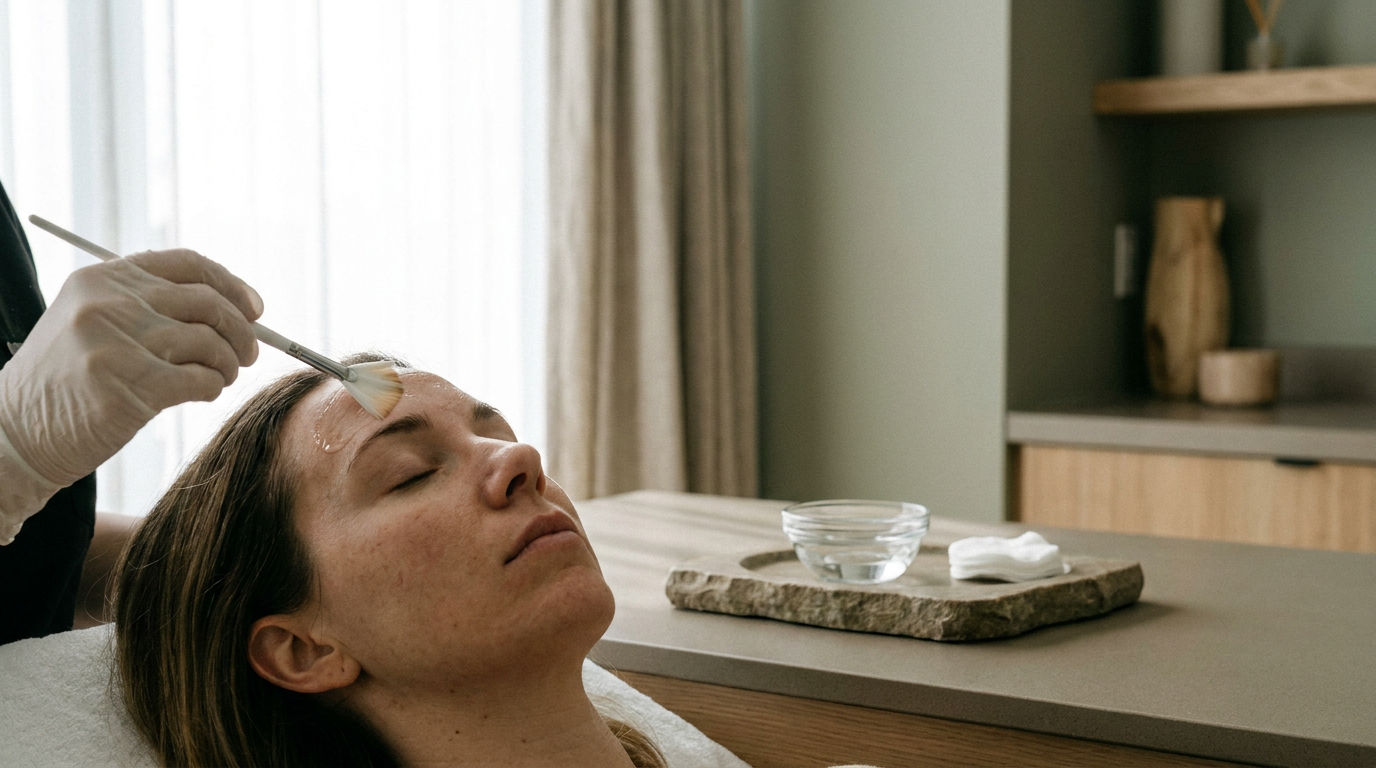
Chemical Peel Overview
Chemical peels use controlled application of acid solutions to remove damaged outer layers of skin. As treated skin sheds, new skin regenerates with improved tone, texture, and clarity. The principle is simple: controlled injury triggers repair.
Acid solutions lower the pH of skin, breaking bonds between cells and dissolving the "glue" holding dead and damaged cells together. This causes controlled exfoliation at varying depths depending on the acid type, concentration, and application time. The skin responds by:
Shedding treated layers through visible peeling
Accelerating cell turnover
Stimulating collagen production
Producing fresh, undamaged skin
Peel Depth Categories
Superficial: Penetrates the epidermis only. Requires none to minimal downtime. Treats dullness, mild discoloration, and texture.
Medium: Penetrates the upper dermis. Requires 5 to 7 days of downtime. Treats moderate pigmentation, fine lines, and acne.
Deep: Penetrates the mid to deep dermis. Requires 10 to 14 plus days of downtime. Treats significant damage, scarring, and deep wrinkles.
The deeper the peel, the more dramatic the results, but also the longer the recovery and higher the risk of complications.
Common Peel Acids
Glycolic acid: An Alpha hydroxy acid (AHA) derived from sugarcane. Its small molecule size allows deep penetration to target texture and fine lines.
Lactic acid: An AHA derived from milk with a larger molecule and gentler action. It has hydrating properties, making it good for sensitive skin.
Salicylic acid: A Beta hydroxy acid (BHA) that is oil soluble. It penetrates pores, making it excellent for acne and congestion.
Mandelic acid: An AHA derived from almonds. Its slower penetration is gentler on darker skin tones and effective for pigmentation.
Resorcinol: A phenolic compound that disrupts hydrogen bonds in keratin, often used in combination peels for pigmentation.
TCA (trichloroacetic acid): A medium to deep peel agent that causes protein coagulation and controlled damage.
Light Peels: SkinCeuticals Glow Peel
The SkinCeuticals Glow Peel is a superficial chemical peel designed for regular maintenance with no downtime. It refreshes skin without disrupting your schedule using a formulation of 20% glycolic acid and 10% lactic acid.
This dual acid formula combines deep penetrating exfoliation with hydrating action. The glycolic acid dissolves bonds between dead cells in the stratum corneum, while lactic acid provides additional exfoliation with less irritation. Together, they resurface without aggressive peeling.
Treatment Details
What it treats: Discoloration, acne, texture irregularities, fine lines, and large pores.
Experience: A 20 to 30 minute session with mild tingling or warmth.
Downtime: None. You may notice subtle flaking between days 2 and 4.
Best for: Peel beginners, busy schedules, and all skin types.
Skinfolio offers this treatment under the Essential Skin and Essential Plus Membership programs. You will see an immediate brightening glow, with best results appearing after 4 to 6 monthly sessions.
Deep Peels: MandeliClear Chemical Peel
The MandeliClear Peel is Skinfolio's most intensive chemical peel, designed for significant pigmentation concerns and visible skin transformation. This is a corrective treatment rather than a maintenance peel.
The multi acid formula includes 9% mandelic acid, 7% lactic acid, 7% salicylic acid, and 7% resorcinol. This combination creates aggressive but controlled exfoliation that reaches deeper than superficial peels to address stubborn pigment.
The Peeling Timeline
Days 1 to 3: You will experience tightness and a temporary darkening of pigmented areas.
Days 3 to 5: Visible peeling begins, usually starting around the mouth and nose.
Days 5 to 10: Active peeling occurs across all treated areas.
Days 10 to 14: Peeling completes and fresh, new skin is revealed.
Important Considerations
This treatment requires strict sun avoidance before and after the procedure. It is not for first time peel patients and may require pre treatment with brightening products. During active peeling, skin appears flaky and patchy, so you should plan for social downtime.
Comparison and Selection
The Glow Peel and Weekend Peel are true lunchtime treatments, while the MandeliClear requires planning around a 10 to 14 day recovery window. For dramatic pigmentation correction, MandeliClear delivers the most significant results. For maintenance and prevention, the other options provide steady improvement.
Which Peel for Your Concern?
For acne: Start with the Glow Peel to exfoliate pore clogging cells. Once active acne is controlled, progress to MandeliClear for marks.
For melasma: MandeliClear is the appropriate choice. The mandelic acid reduces the risk of triggering more pigmentation, though strict SPF 30 plus use is mandatory.
For sensitive skin: The Weekend Peel avoids chemical irritation entirely.
Progression Strategy
The most effective approach at Skinfolio is strategic progression rather than jumping to the deepest treatment immediately.
Phase 1 (Foundation): Begin with monthly Glow Peel treatments for 1 to 3 months to establish a baseline.
Phase 2 (Assessment): Evaluate results to see if stubborn pigmentation remains.
Phase 3 (Correction): Add MandeliClear treatments, spaced 6 to 8 weeks apart, for targeted correction.
Phase 4 (Maintenance): Return to monthly Glow Peel or Weekend Peel treatments to maintain the fresh results.
Deeper peels are best scheduled during lower sun months, such as fall and winter, when UV exposure risk is reduced. The Skinfolio Essential Skin Membership includes access to all three peel options, providing flexibility for your annual skin schedule.
Frequently Asked Questions
How often can I get a chemical peel? Superficial peels and the Glow peel can be done every 4 weeks. The MandeliClear requires 6 to 8 weeks between treatments to allow complete healing.
Will the MandeliClear peel hurt? You will feel significant tingling, warmth, and potentially stinging during application. Discomfort subsides quickly after the peel is neutralized, though the skin will feel tight during recovery.
Can I wear makeup during the peeling phase? For MandeliClear, avoid makeup for the first few days. Once peeling begins, mineral makeup can be applied gently, though it may cling to flaking skin.
Are chemical peels safe for dark skin? Yes, with proper selection. Mandelic acid is specifically chosen for darker skin tones because its larger molecule size reduces the risk of post inflammatory hyperpigmentation.
What skincare should I use after a peel? Use a gentle cleanser, hydrating moisturizer, and SPF 30 plus. Avoid active ingredients like retinol or AHAs for 5 to 7 days after light peels and 14 days after a MandeliClear.
The bottom line
Whether you need a quick refresh with a Glow Peel or deep correction with MandeliClear, Skinfolio provides physician led expertise to safely transform your skin texture and tone.
Personalised skin guidance
Book a complimentary consultation with a Skinfolio specialist to build a routine tailored to your goals.